
Green Web Hosting Providers: 7 Real Renewable Picks (2026)
Carbon offsets are being retired as green credentials on October 1, 2026. Here are 7 green web hosting providers with real renewable energy — compared, verified, and ranked.
Choosing green web hosting providers used to be simple: look for a badge, a few renewable-energy claims, maybe a tree-planting partnership, and you were done. That era ends this year. In January 2026, the Green Web Foundation announced that from October 1, 2026, carbon offsets will no longer count as valid evidence for green hosting verification — a seismic change that nobody in the hosting review space is talking about yet.
If you are picking green web hosting providers right now, the offset-heavy model you see on most review sites is about to be downgraded. Real renewable energy — direct power purchase agreements, verifiable renewable energy certificates tied to actual consumption, or data centers physically running on wind, solar, or hydro — is becoming the only credible benchmark. This guide ranks seven green web hosting providers that already meet (or will meet) the new bar, so your hosting decision still holds up after the rule change.
For most WordPress users, GreenGeeks is the top pick — 300% renewable energy match and over a decade of verified green credentials. For premium managed WordPress, Kinsta on Google Cloud wins. For agencies and e-commerce, ScalaHosting balances green-powered data centers with SPanel savings.
01. Why Green Web Hosting Providers Matter More Than Ever
Data centers now consume somewhere between 1% and 2% of global electricity, and industry forecasts point to that figure roughly doubling by 2026 as AI workloads scale. Every website you own runs on that electricity. Choosing green web hosting providers is the single biggest environmental lever most site owners can pull, because your hosting provider determines whether your pageviews are powered by wind, solar, and hydro — or by gas and coal with a paper-thin carbon offset draped over the top.
The regulatory landscape is shifting hard in this direction. Europe’s Energy Efficiency Directive now requires data center operators above a size threshold to publicly disclose energy consumption and renewable sourcing. The United States is adding similar disclosure rules at the state level. And the GHG Protocol — the global standard for corporate carbon reporting — is being revised so that annual REC-matching alone will no longer qualify as “green” in the strictest categories. In other words, the loopholes that let traditional hosts call themselves green are closing fast.
This matters commercially too. Search engines, sustainability-minded customers, and corporate procurement teams are all increasingly preferring sites hosted on verified renewable infrastructure. Picking from the right green web hosting providers today protects your reputation, your compliance posture, and your long-term hosting costs.
02. The October 2026 Rule Change Most Green Web Hosting Providers Are Quiet About
In January 2026, the Green Web Foundation opened a public consultation on the first major revision of its verification criteria since 2019. The public feedback deadline was February 28, 2026, and the updated rules take full effect on October 1, 2026. The headline change: carbon offsets will no longer be accepted on their own as evidence of being a green hosting provider.
The Green Web Foundation publishes its “No Fossil Fuels in Our Tech Stacks” position and draft updated criteria. Providers, reviewers, and the public are invited to respond.
Public consultation ends. Hosting providers currently relying on offsets alone begin scrambling to secure renewable energy contracts or EACs in time.
New verification criteria apply. Offsets alone stop counting. Any verified green hosting provider that cannot show a direct renewable supply, a power purchase agreement, or valid energy attribute certificates risks losing its green status.
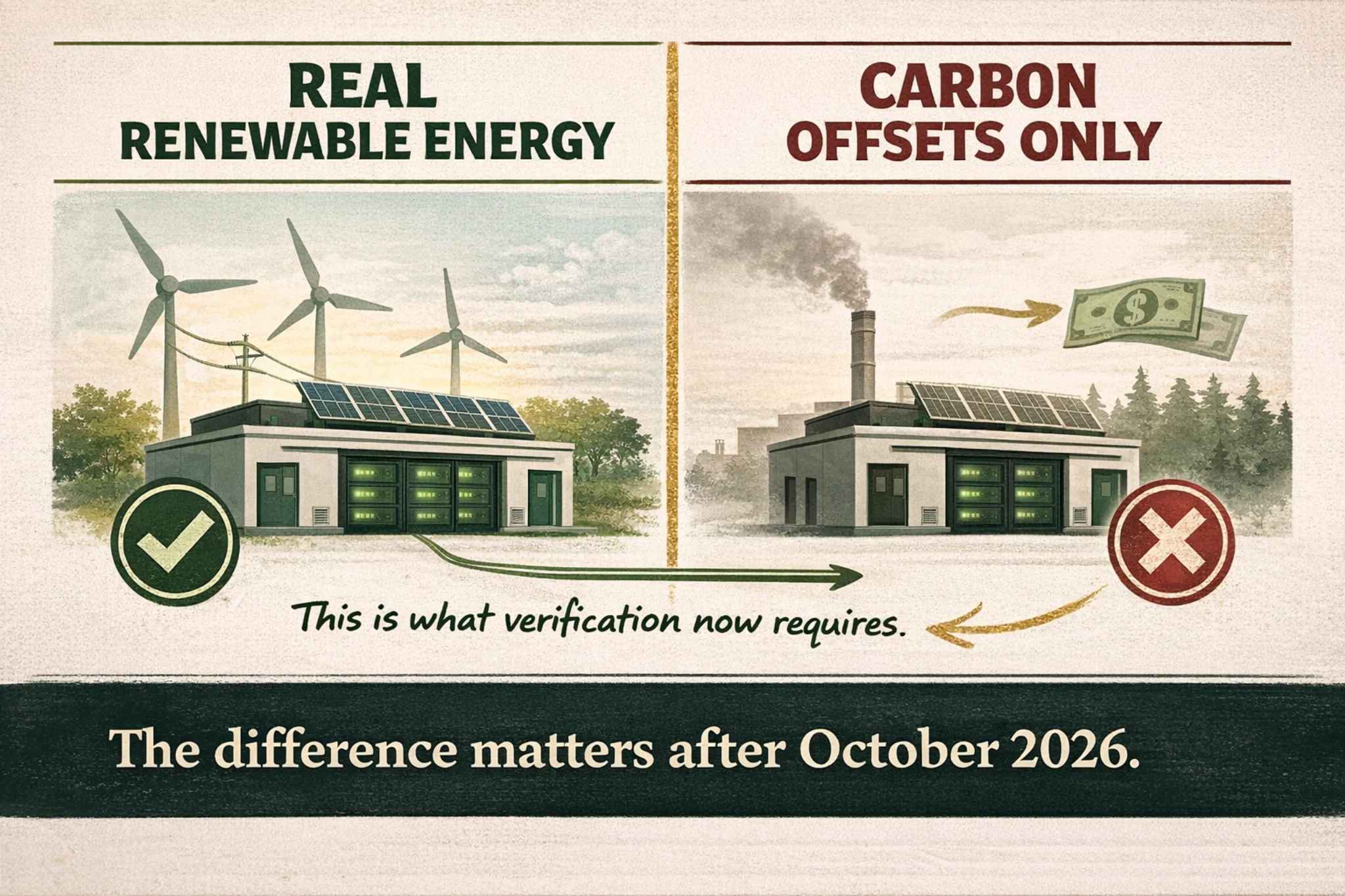
This is a big deal because many green web hosting providers have leaned on offsets for years. Some pay into tree-planting or methane-capture schemes and then describe their hosting as “carbon neutral” — technically accurate, but increasingly weak under the new standard. After October 1, 2026, you will see a clear split between real green web hosting providers backed by direct renewable energy and those whose green story was mostly accounting.
03. How We Ranked These Green Web Hosting Providers
We did not just rely on marketing claims. Every green web hosting provider in this guide was evaluated against four criteria aligned with the updated Green Web Foundation framework.
Evidence type: Direct renewable supply (best), power purchase agreements, high-quality EACs tied to annual consumption, or offsets (weakest). Infrastructure transparency: Do they publish a Power Usage Effectiveness (PUE) figure, data center locations, and energy mix? Third-party verification: Are they in the Green Web Foundation Directory or recognized by the US EPA Green Power Partnership? Performance trade-offs: A green hosting provider that ranks poorly on speed is not useful, because slow sites waste energy per pageview, too.
Only providers that pass at least three of the four filters made the final list of green web hosting providers below.
04. The 7 Green Web Hosting Providers Compared
Here is the full comparison of the seven best green web hosting providers for 2026, ranked by how well their green credentials hold up under the new verification framework.
| Provider | Green Credential | From | Best For | Post-Oct 2026 |
|---|---|---|---|---|
| GreenGeeks | 300% REC match (wind) | $2.95/mo | Shared / WordPress | Strong |
| Kinsta | 100% Google Cloud renewable | $35/mo | Premium WordPress | Strong |
| ScalaHosting | Green-powered data centers | $3.95/mo | Managed VPS / Agencies | Strong |
| SiteGround | Google Cloud infrastructure | $3.99/mo | WordPress / WooCommerce | Strong |
| 20i | 100% renewable UK network | £5/mo | UK Reseller / Agency | Strong |
| IONOS | Mixed: renewables + offsets | $4/mo | Small business | Partial |
| DreamHost | LEED offices, grid-renewables | $2.59/mo | Bloggers / Budget | Partial |
05. Detailed Reviews of Each Green Web Hosting Provider
1. GreenGeeks — Best Overall Green Web Hosting Provider
GreenGeeks has been a fixture in the green web hosting providers space since 2008. The company partners with the Bonneville Environmental Foundation to purchase three times the renewable energy (as wind-power RECs) that its data centers consume — the well-known “300% Green Website” claim. It has been a US EPA Green Power Partner since 2009.
The strongest all-round pick among green web hosting providers. Fast LiteSpeed servers, free CDN, nightly backups, and a credible, decade-long sustainability track record.
2. Kinsta — Premium Managed WordPress on Google Cloud
Kinsta runs entirely on Google Cloud Platform, which has matched 100% of its global electricity consumption with renewables every year since 2017. Google is now pushing toward 24/7 carbon-free energy in every region. That infrastructure commitment is arguably more robust than RECs bought annually — and it survives the October 2026 rule change because it is backed by direct power purchase agreements rather than offsets.
The premium option among green web hosting providers. Expensive, but the performance and green infrastructure are genuinely world-class.
3. ScalaHosting — Best Green VPS & Managed Cloud
ScalaHosting partners with data centers powered by renewable energy to reduce their environmental impact. Combined with SPanel — a free alternative to cPanel that cuts licensing costs — it is a strong pick for agencies, SaaS founders, and anyone running managed VPS who also wants a lower carbon footprint without premium pricing.
The smart choice among green web hosting providers if you need managed VPS power without the cPanel tax.
4. SiteGround — Google Cloud–Backed WordPress Host
SiteGround runs its hosting on Google Cloud, inheriting the same 100% renewable energy match. It adds features such as custom caching, Site Tools, and robust WordPress/WooCommerce support. For most users choosing between Google Cloud-based green web hosting providers, the pick comes down to Kinsta for premium managed WordPress hosting or SiteGround for mid-tier.
5. 20i — UK’s 100% Renewable Hosting Platform
20i powers over one million websites on 100% renewable energy, with a reported data-center PUE of 1.2 — significantly better than the industry average of around 1.58. Hosting is EU-based, which is ideal for GDPR compliance and for agencies serving UK and European clients. Among the green web hosting providers on this list, 20i is the strongest UK-native option.
6. IONOS — Partial Green: Good in Europe, Weaker in the US
IONOS claims 100% renewable electricity in its European data centers and wind power in its US facility, then uses carbon offsets to balance remaining emissions. That hybrid model works today, but from October 2026, the offset portion weakens. Still a credible pick among green web hosting providers if your traffic is European.
7. DreamHost — Budget Green Option (With Caveats)
DreamHost runs efficient cooling systems, uses municipal and reclaimed water, and holds LEED Platinum certification on its offices. However, it does not hold its own REC certifications as GreenGeeks does. Among green web hosting providers, DreamHost is best framed as an “environmentally responsible” choice rather than a fully verified one — worth checking again after the October 2026 rule change.

06. Which Green Web Hosting Providers Fit Your Use Case?
The right choice depends on what you are building. Here is how I would match green web hosting providers to four common scenarios.
Pick: GreenGeeks shared hosting. $2.95/mo, 300% renewable match, fast enough for any blog under 50K monthly visits.
Pick: SiteGround or Kinsta. Both ride Google Cloud’s 100% renewable match. SiteGround for mid-budget; Kinsta for premium.
Pick: ScalaHosting managed VPS or 20i Reseller. Both give you client-billing control on a green-powered backbone.
Pick: Kinsta or ScalaHosting cloud VPS. Both combine real renewables with headroom for peak-season traffic.
07. How to Verify Any Green Web Hosting Provider Yourself
Do not take any hosting company’s word for their eco claims — including mine. Use this 7-step workflow to verify green web hosting providers before you sign up.
01. Check The Green Web Foundation Directory
Type the domain into the free Green Web Check tool. If it is listed, you can click through to see the evidence type.
02. Ask for the evidence type
Direct supply > PPA > EACs/RECs matching annual consumption > offsets. Post-October 2026, the bottom of that stack stops counting.
03. Look at PUE
A Power Usage Effectiveness of 1.1–1.2 is world-class. The industry average is around 1.58. The best green web hosting providers publish this number.
04. Check infrastructure partners
If a host runs on Google Cloud or an 04. Check infrastructure partners
If a host runs on Google Cloud or at a data center operator that has signed the Climate Neutral Data Center Pact, you can independently verify the upstream commitments.
You can independently verify the upstream commitments.
05. Watch for additionality
Buying old RECs from decades-old wind farms does not build new clean energy. Credible green web hosting providers invest in new renewable energy projects.
06. Read the sustainability report
Serious green web hosting providers publish annual sustainability reports. Usually, no report means no serious program.
07. Re-check after October 2026
Re-run the Green Web Check after the new criteria take effect. Any provider that drops off the Directory is a clear signal that their green story was offset-heavy.
Google’s search quality guidelines reward content that demonstrates experience and expertise. Displaying a verified green hosting badge from The Green Web Foundation Directory on your site adds a small but measurable trust signal — and helps justify claims about your own sustainability.
08. Common Greenwashing Tactics to Watch For
Not every self-proclaimed eco-hosting provider is a real green web hosting provider. These are the red flags I check for when auditing a hosting brand.
Planting trees is a carbon offset, not a renewable energy strategy. Lovely — but it does not power a server.
If a provider says “carbon neutral” but will not publish energy mix or PUE, the neutrality is almost certainly offset-based.
A certified green office is nice, but 95% of a hosting provider’s footprint is in the data center, not in HQ.
If the green claim is “we partner with environmental organizations” with no specific percentages, you are reading marketing copy.
Bonuses & Resources
| Resource | What It Does | Link |
|---|---|---|
| Green Web Check | Verify if any domain is hosted on Green | thegreenwebfoundation.org |
| Website Carbon Calculator | Estimate CO2 per pageview | websitecarbon.com |
| EPA Green Power Partner List | Check US-based green credentials | epa.gov/greenpower |
| Free Keyword Tool | Research eco-hosting keywords | tools.keyforriches.com |
ScalaHosting: Green-Powered, SPanel-Included
Managed cloud VPS on renewable-powered data centers, with no cPanel license fees and free migration. Our pick for agencies and serious site owners among the green web hosting providers in 2026.
Free Tools from AI Key for Riches
Use our free suite of SEO, keyword, and backlink tools to research green-hosting keywords and plan your content roadmap — no signup required.
Further Reading
- AI Tech News December 2025 — The Pillar Post
- Cost of Backlinks: What To Pay In 2026
- Free SEO & Keyword Tools (Key For Riches)
- Green Web Foundation: No Fossil Fuels In Our Tech Stacks
- Google Data Centers: Operating Sustainably
Frequently Asked Questions
Q: What are green web hosting providers?
A: Green web hosting providers are hosting companies that power their data centers with renewable energy — directly, through power purchase agreements, or through verified energy attribute certificates tied to their actual electricity consumption. They aim to reduce the carbon footprint of every website they host compared to hosts that run purely on fossil-fuel grid electricity.
Q: Why are carbon offsets being retired by The Green Web Foundation in October 2026?
A: The Green Web Foundation announced in January 2026 that under its updated verification criteria — effective October 1, 2026 — carbon offsets will no longer be accepted as evidence of green hosting. The reason is that offsets do not avoid or reduce actual fossil-fuel electricity use; they compensate for it. The new criteria prioritize direct renewable supply, PPAs, and EACs instead.
Q: Are green web hosting providers more expensive than regular hosts?
A: No, not usually. GreenGeeks starts at $2.95/mo, DreamHost at $2.59/mo, and ScalaHosting shared plans at $3.95/mo — all directly competitive with non-green hosts. The only meaningful premium applies at the managed WordPress end, where Kinsta starts around $35/mo, but that is a performance premium rather than a green premium.
Q: Are green web hosting providers slower than regular hosts?
A: In most cases, they are actually faster. Efficient hardware and good PUE scores correlate with modern infrastructure — NVMe storage, LiteSpeed servers, and aggressive caching. GreenGeeks, Kinsta, and ScalaHosting all regularly rank in the top tier for WordPress load times.
Q: How do I verify a green hosting provider’s credentials?
A: Use the free Green Web Check tool at thegreenwebfoundation.org to confirm any domain. Then ask the host for its energy mix, PUE figure, and sustainability report. Genuine green web hosting providers publish all three. If any of those are missing, treat the green claim as marketing rather than fact.
Q: What is a good PUE score for green web hosting providers?
A: A PUE (Power Usage Effectiveness) of 1.0 is theoretically perfect — 100% of the power goes to compute and zero to overhead. The industry average is around 1.58. World-class green hosts and hyperscalers hit 1.10-1.20. Anything above 1.5 is not leading the pack.
Q: Will Google’s Gemini and other AI search systems prefer green-hosted websites?
A: There is no direct ranking signal for green hosting in Google Search today. But sustainability disclosure, E-E-A-T trust signals, and the increasing focus on corporate environmental reporting mean green hosting is becoming a credibility asset. As AI systems get better at assessing publisher quality, verifiable green credentials plausibly contribute to that trust layer.
Q: Can I migrate my site to a green web hosting provider without downtime?
A: Yes. Most green web hosting providers on this list — GreenGeeks, Kinsta, ScalaHosting, SiteGround — offer free migration services. The standard approach is to copy your site to the new host, test on a temporary URL, then update your domain’s nameservers. Done right, end-user downtime is effectively zero.
October 1, 2026, is the inflection point for green web hosting providers. Pick a host with a real renewable supply now — GreenGeeks, Kinsta, ScalaHosting, SiteGround, or 20i — and you will still be on a verified green platform after the rule change. Pick an offset-heavy host, and you will be auditing this decision again by Q4.