7 Critical Social Media Safety Regulations 2026 That Will Transform Youth Protection
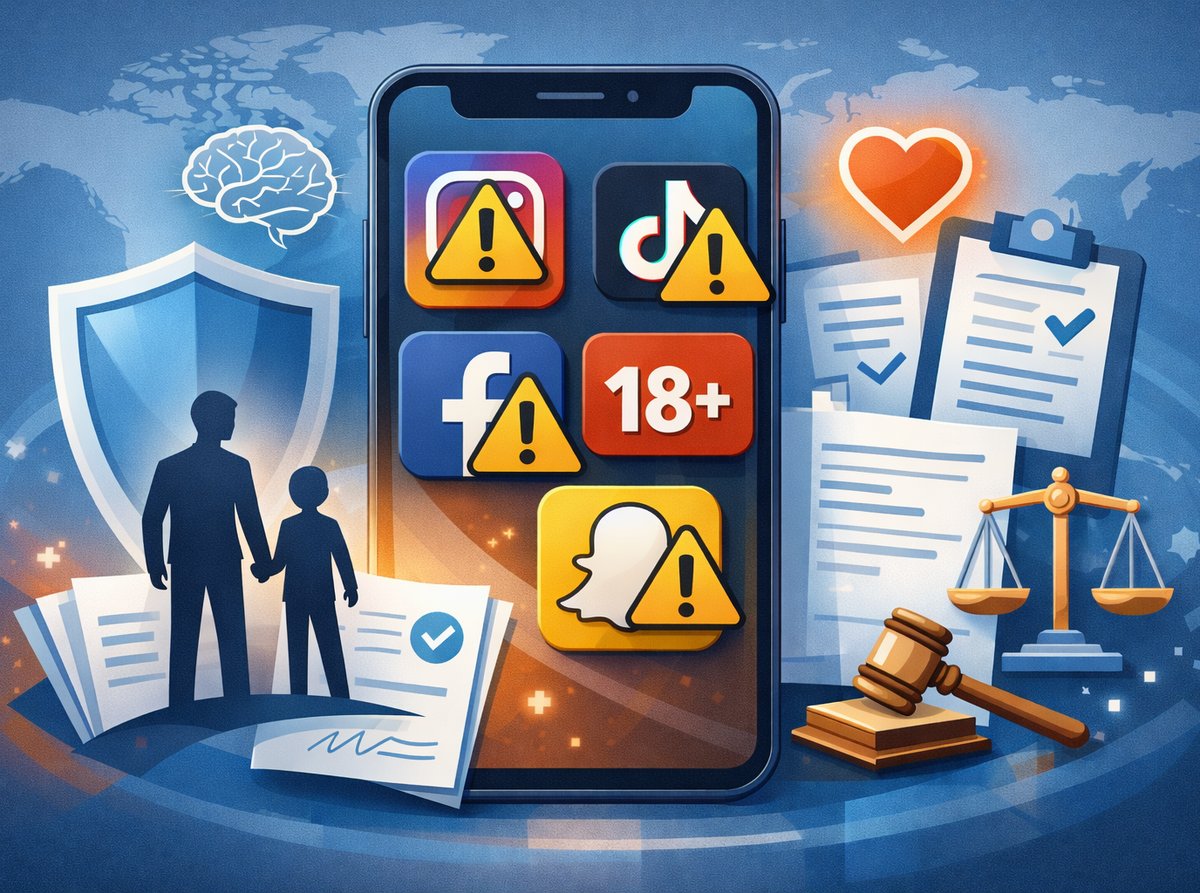
The landscape of digital safety is undergoing unprecedented transformation as governments worldwide implement social media safety regulations 2026 designed to protect young users from mental health harms and platform exploitation. From mandatory warning labels to comprehensive age verification systems, these regulatory frameworks represent the most significant shift in social media governance since the platforms emerged two decades ago.
Recent research from New York’s Governor’s office reveals that adolescents spending more than three hours daily on social media face double the risk of anxiety and depression, prompting lawmakers across multiple jurisdictions to implement aggressive protective measures. As we navigate through 2026, understanding these evolving social media safety regulations 2026 becomes essential for parents, educators, platform operators, and policymakers alike.
1. Mental Health Warning Labels: The New Digital Tobacco Warning in Social Media Safety Regulations 2026
Multiple states and countries have implemented mandatory mental health warning labels on social media platforms, fundamentally changing how users encounter these services. The social media safety regulations 2026 in New York, Minnesota, and California have enacted legislation requiring platforms with addictive features to display unavoidable warnings about potential psychological harms.
According to Newsweek’s coverage, New York’s groundbreaking legislation requires social media companies to display warning labels when young users engage with addictive feeds, autoplay features, or infinite scroll mechanisms. These social media safety regulations 2026 warnings appear initially and periodically thereafter with continued use, and users cannot bypass or click through them. The law explicitly targets features designed to prolong engagement, recognizing their role in the youth mental health crisis.
Minnesota’s approach, as reported by NPR, takes effect in July 2026 and requires all social media users in the state to encounter pop-up warnings before logging in. These social media safety regulations 2026 labels must acknowledge that prolonged social media use poses hazards to mental health, drawing direct parallels to tobacco and alcohol warnings. The Minnesota Department of Health will determine the specific warning language that platforms must display prominently.
California’s AB 56, effective January 2027 according to the California Attorney General’s office, requires platforms to display warnings stating: “The Surgeon General has warned that while social media may have benefits for some young users, social media is associated with significant mental health harms and has not been proven safe for young users.” These social media safety regulations 2026 warnings must appear upon initial daily access, after three hours of cumulative use, and hourly thereafter for users under 18.
2. Australia’s Revolutionary Under-16 Social Media Ban Under Social Media Safety Regulations 2026
Australia implemented the world’s first comprehensive social media ban for children under 16, which took effect on December 10, 2025, establishing a global benchmark for social media safety regulations in 2026. This unprecedented legislation, documented by Australia’s eSafety Commissioner, prohibits Facebook, Instagram, TikTok, YouTube, Snapchat, Reddit, Twitch, Kick, Threads, and X from creating or maintaining accounts for Australian users under 16.
The social media safety regulations 2026 in Australia place enforcement responsibility entirely on platforms, with fines of up to 49.5 million Australian dollars (approximately $32 million USD) for non-compliance, as reported by CNBC. Critically, no penalties apply to children or parents who circumvent the ban, focusing accountability solely on technology companies under these social media safety regulations 2026.
Platforms have implemented various age-verification technologies to comply with the 2026 social media safety regulations, including facial-recognition scanning, identity-document verification, and behavioral inference. According to CNN’s analysis, Meta began removing under-16 users from Facebook, Instagram, and Threads in early December 2025, while TikTok deactivated all accounts used by minors on the ban’s effective date. Reddit introduced privacy-preserving models to predict users’ ages and voluntarily launched enhanced safety features globally for users under 18.
Australia’s eSafety Commissioner monitors compliance with these social media safety regulations 2026 and can add new platforms to the restricted list as they gain popularity. This dynamic approach acknowledges that young users may migrate to alternative platforms, requiring ongoing regulatory vigilance.
3. Enhanced COPPA Protections and Biometric Data Safeguards in Social Media Safety Regulations 2026
The Federal Trade Commission published significant amendments to the Children’s Online Privacy Protection Rule (COPPA) in April 2025, representing the first comprehensive update since 2013. These changes, which became effective June 23, 2025, with full compliance required by April 22, 2026, significantly expand protections for children under 13 as part of broader social media safety regulations 2026.
Key social media safety regulations 2026 updates, as detailed in the Federal Register, include explicitly expanding the definition of “personal information” to include biometric identifiers capable of automated individual recognition. This encompasses fingerprints, handprints, retina and iris patterns, voiceprints, facial templates, and genetic data, including DNA sequences. Government-issued identifiers like social security numbers, state ID cards, birth certificates, and passport numbers now receive explicit protection under the 2026 social media safety regulations.
The amended COPPA Rule, a cornerstone of social media safety regulations 2026, prohibits operators from retaining children’s personal information indefinitely, requiring retention only as long as reasonably necessary for specific collection purposes. According to White & Case’s legal analysis, operators must establish formal written information security programs that include annual risk assessments, regular testing and monitoring, vendor due diligence procedures, and annual program evaluations incorporating new technical or operational risk control methods.
Operators must now obtain separate verifiable parental consent before disclosing children’s personal information for purposes not integral to their websites or online services under the Social Media Safety Regulations 2026. This requirement prevents third-party data sharing for advertising or analytics without explicit parental authorization, fundamentally limiting how children’s data flows through the digital advertising ecosystem.
4. State-Level Time Restrictions and Parental Consent Requirements
Virginia implemented strict time limits on social media use for minors starting January 1, 2026, as part of evolving social media safety regulations. The legislation, reported by WJLA News, restricts users under 16 to one hour of daily screen time on platforms including Instagram, TikTok, Snapchat, and YouTube unless parents or guardians provide verifiable consent for extended screen time.
This amendment to Virginia’s Consumer Data Protection Act places enforcement responsibilities directly on social media companies operating within the state under the 2026 social media safety regulations. However, the law faces legal challenges from NetChoice, an organization representing major technology companies, which argues that limiting social media access for minors violates the First Amendment’s free speech rights.
Tennessee’s Protecting Kids From Social Media Act, enacted May 2024, requires social media companies to verify all user ages within 14 days of account access attempts as part of comprehensive social media safety regulations 2026. Users under 18 must obtain parental consent to maintain accounts. Parents receive the authority to view privacy settings on children’s accounts, set time restrictions, and implement mandatory breaks that prevent account access.
5. Platform Accountability and Transparency Legislation in Social Media Safety Regulations 2026
The bipartisan Platform Accountability and Transparency Act (PATA), introduced by Senator Chris Coons and colleagues, aims to require social media companies to share data with the public and independent researchers. This legislation addresses the dangerous lack of transparency about how platforms impact children, families, society, and national security under the Social Media Safety Regulations 2026.
Senator Coons emphasized that social media platforms shape the information consumed by billions globally, yet there is minimal transparency into their operations and effects. PATA would provide a data-driven understanding of platform effects on children, families, democracy, and national security by requiring companies to grant researchers access to platform data under strict privacy and cybersecurity standards as part of the 2026 social media safety regulations.
The Kids Off Social Media Act, another Congressional proposal advancing social media safety regulations in 2026, would prohibit social media platforms from allowing children under 13 to create or maintain accounts, consistent with current major platform practices. The legislation would ban algorithmic content recommendations for users under 17, with limited exceptions allowing chronological feeds and proactive content searches.
The Algorithm Accountability Act, introduced by Representatives from Utah and Maryland, according to ABC4 News, modernizes Section 230 of the Communications Decency Act by establishing clear duty-of-care requirements. Platforms must responsibly design, train, test, deploy, and maintain algorithmic systems to prevent foreseeable bodily injury or death under social media safety regulations 2026. The legislation provides individuals with civil rights of action in federal court when platforms negligently expose users to harmful or radicalizing content.
6. International Regulatory Momentum and Global Standards
The social media safety regulations 2026 movement extends far beyond the United States and Australia. The European Parliament passed a non-binding resolution in November advocating for a minimum age of 16 for social media access, with parental consent provisions for 13-to-15-year-olds. The European Union has proposed banning addictive features like infinite scrolling and auto-play for minors under the comprehensive social media safety regulations 2026, potentially leading to EU-wide enforcement against non-compliant platforms.
Denmark, Norway, France, Spain, Malaysia, and New Zealand have announced plans to adopt social media restrictions similar to Australia’s model as part of their 2026 social media safety regulations. These nations recognize Australia as a pioneering test case, closely monitoring implementation challenges and effectiveness before finalizing their own regulatory frameworks.
The United Kingdom, Germany, and France have already restricted minors’ access to certain social media features, establishing precedent for comprehensive youth protection measures under evolving social media safety regulations 2026. This coordinated international approach signals growing consensus that platform self-regulation has failed to protect vulnerable users adequately.
7. Implementation Challenges and Technology Solutions
Implementing social media safety regulations in 2026 requires sophisticated age-verification and assurance technologies. Platforms employ multiple methods, including behavioral inferencing, facial recognition, identity document verification, and pattern analysis, to determine user ages with reasonable accuracy.
The Age Check Certification Scheme, a UK company recruited by the Australian government, released reports in June and August 2025 concluding that no significant technological barriers prevent the implementation of age restrictions under the 2026 social media safety regulations. However, coordination among different services remains essential for successful implementation. The reports highlighted the benefits and drawbacks of various age verification methods, emphasizing the balance between privacy protection and accuracy.
Critics express concerns about the privacy implications of the extensive age verification systems required by the Social Media Safety Regulations 2026. Organizations such as the Electronic Frontier Foundation and the ACLU argue that age-verification requirements create privacy risks, impose free-speech burdens, and operate ineffectively. Technologies like VPNs enable circumvention of geographic restrictions, while the loss of anonymity can chill free speech.
Enforcement presents ongoing challenges, as determined users may find workarounds and migrate to less-regulated platforms despite the 2026 social media safety regulations. Some experts advocate alternative approaches, including digital literacy education, parental controls, and platform design changes, rather than blanket age restrictions, which could drive youth activity underground.
Impact on Platform Business Models and Design Philosophy
The social media safety regulations 2026 fundamentally challenge platform business models built on maximizing user engagement through algorithmic content delivery. Warning label requirements, time restrictions, and parental consent provisions all directly counter platforms’ financial incentives to increase screen time and exposure to advertising.
Platforms must redesign user experiences to accommodate periodic warnings without significantly disrupting engagement metrics under the 2026 social media safety regulations. California’s requirement for hourly warnings after 3 hours of use particularly challenges platforms that depend on extended user sessions. Similarly, algorithmic recommendation bans for users under 17 remove the powerful tools that platforms use to capture attention.
The requirement for separate parental consent before sharing children’s data with third parties under the Social Media Safety Regulations 2026 severely limits platforms’ ability to monetize young users through targeted advertising. This fundamental shift in data practices necessitates new revenue models that don’t rely on extensive data collection and sharing from underage users.
Mental Health Research and Evidence-Based
The social media safety regulations 2026 draw on extensive research linking social media use to adverse mental health outcomes among adolescents. Studies from the American Academy of Pediatrics consistently show that teenagers spending over three hours daily on social media face double the risk of anxiety and depression compared to peers with lower usage.
Approximately half of adolescents report that social media negatively affects their body image perceptions under current platform designs prompting social media safety regulations 2026. Teenagers with the highest social media use levels are nearly twice as likely to rate their overall mental health as poor or very poor. These findings prompted Former U.S. Surgeon General Vivek Murthy to call for warning labels on social media platforms, supported by a bipartisan coalition of 42 attorneys general.
However, research also reveals complexity in social media’s mental health effects that social media safety regulations 2026 must address. The American Psychological Association notes that while positive and negative experiences vary among adolescents, no population-level clinically significant effect uniformly affects all teens identically. Individual differences, usage patterns, and content consumed lead to varied outcomes, requiring nuanced approaches beyond blanket restrictions.
Future Outlook and Regulatory Evolution
The social media safety regulations 2026 represent initial steps in ongoing regulatory evolution. Lawmakers and regulators explicitly acknowledge that current measures may require adjustment based on implementation experiences and emerging research. Australia’s eSafety Commissioner indicated ongoing platform list updates as new services gain popularity or existing platforms modify features under evolving social media safety regulations 2026.
Federal legislation including COPPA 2.0 and the Kids Online Safety Act (KOSA) remains under Congressional consideration, potentially establishing nationwide standards superseding patchwork state regulations as part of comprehensive social media safety regulations 2026. The FTC scheduled a January 28, 2026, workshop to discuss age verification and estimation technology issues, indicating continued regulatory attention to implementation challenges.
This comprehensive analysis of social media safety regulations 2026 demonstrates unprecedented global momentum toward protecting young users from documented platform harms. As implementation proceeds and research accumulates, regulations will likely evolve, balancing youth protection with innovation, free expression, and privacy considerations. The success or failure of pioneering efforts in Australia, New York, Minnesota, and California will significantly influence whether other jurisdictions adopt similar measures or pursue alternative approaches to the persistent challenge of keeping children safe online. For families, educators, and policymakers navigating this transformation, staying informed about these rapidly evolving developments remains essential to supporting young people’s healthy relationships with digital technology.
Frequently Asked Questions About Social Media Safety Regulations 2026
What are social media safety regulations 2026, and why are they being implemented?
Social media safety regulations 2026 are comprehensive legislative frameworks implemented by governments worldwide to protect young users from mental health harms associated with social media use. These social media safety regulations 2026 include mandatory warning labels, age restrictions, parental consent requirements, and platform accountability measures. They’re being implemented because research shows adolescents spending over three hours daily on social media face double the risk of anxiety and depression, with approximately half of teens reporting that social media negatively affects their body image and mental health.
Which platforms are affected by the 2026 social media safety regulations?
Major platforms affected by social media safety regulations 2026 include Facebook, Instagram, TikTok, YouTube, Snapchat, Reddit, X (formerly Twitter), Threads, Twitch, and Kick. The specific platforms covered vary by jurisdiction, with Australia’s ban applying to these ten services while state-level U.S. regulations may define covered platforms differently based on features like addictive feeds, autoplay, or infinite scroll. Platforms like WhatsApp, Discord, and educational services often receive exemptions as they serve primarily communication or learning purposes rather than social interaction feeds.
How do mental health warning labels on social media work under 2026 regulations?
Mental health warning labels under the 2026 social media safety regulations work by displaying unavoidable messages to users about potential psychological harms. New York requires warnings when users initially engage with addictive features and periodically thereafter, with no bypass option. California’s AB 56 requires warnings upon initial daily access, after three hours of cumulative use, and hourly thereafter for users under 18. Minnesota’s approach requires pop-up warnings before logging on. These labels draw parallels to tobacco and alcohol warnings, informing users that prolonged social media use is associated with anxiety, depression, and other mental health conditions.
What is Australia’s under-16 social media ban, and how is it enforced?
Australia’s under-16 social media ban, which took effect on December 10, 2025, prohibits children under 16 from creating or maintaining accounts on major platforms, including Facebook, Instagram, TikTok, YouTube, and Snapchat, as part of the groundbreaking social media safety regulations 2026. Enforcement responsibility lies entirely with platforms, which face fines up to 49.5 million Australian dollars for non-compliance. Platforms use age verification technologies, including facial recognition, identity document verification, and behavioral inference, to identify and remove underage users. Critically, no penalties apply to children or parents, focusing accountability solely on technology companies. Australia’s eSafety Commissioner monitors compliance and can add new platforms to the restricted list as needed.
What are the updated COPPA requirements for 2026, and who do they protect?
The updated COPPA requirements for 2026, effective June 23, 2025, with full compliance by April 22, 2026, protect children under 13 by expanding definitions of personal information and strengthening data protection requirements under the 2026 social media safety regulations. The amendments explicitly include biometric identifiers such as fingerprints, facial templates, and voiceprints, as well as government-issued identifiers. Platforms must obtain separate parental consent before sharing children’s data with third parties for non-integrated purposes, prohibit indefinite data retention, and establish formal written information security programs with annual risk assessments. These social media safety regulations 2026 updates represent the first comprehensive COPPA revision since 2013, addressing modern technologies and data practices that didn’t exist when the rule was last updated.
How do state-level social media time restrictions work in 2026?
State-level social media time restrictions in 2026 vary by jurisdiction but typically limit daily platform use for minors under social media safety regulations 2026. Virginia’s legislation, effective January 1, 2026, restricts users under 16 to one hour daily on platforms like Instagram, TikTok, Snapchat, and YouTube unless parents provide verifiable consent for extended time. Tennessee requires age verification within 14 days and parental consent for users under 18, with parents able to set time restrictions and mandatory breaks. California’s AB 56 requires hourly warnings after 3 hours of use for users under 18. These social media safety regulations 2026 place enforcement responsibility on platforms rather than families, though legal challenges question their constitutionality and effectiveness.
What platform accountability measures are included in the 2026 social media regulations?
Platform accountability measures in the 2026 social media safety regulations include transparency requirements, data-sharing mandates, and duty-of-care obligations. The Platform Accountability and Transparency Act (PATA) requires companies to share data with the public and independent researchers under strict privacy protections. The Algorithm Accountability Act establishes clear duty-of-care requirements for platforms to design and maintain algorithmic systems responsibly, prevent foreseeable harm, and grant individuals civil rights of action when platforms negligently expose users to harmful content. Safe Harbor programs under updated COPPA must publicly disclose membership lists and submit periodic reports to the FTC. These measures shift from platform self-regulation to government-mandated accountability with significant financial penalties for non-compliance.
What are the main challenges in implementing social media safety regulations 2026?
Main challenges in implementing social media safety regulations in 2026 include age-verification accuracy, privacy concerns, circumvention via VPNs, enforcement difficulties, and balancing protection with access to beneficial content. Critics argue that age verification systems create privacy risks through extensive data collection, while technologies like VPNs enable geographic restriction bypassing. Determined users may migrate to less regulated platforms, creating “whack-a-mole” enforcement problems. Legal challenges question the regulations’ constitutionality under free speech protections. Technical limitations mean some age verification methods remain unreliable. Experts debate whether blanket age restrictions prove more effective than digital literacy education, parental controls, and improved platform design. Implementation success in pioneering jurisdictions like Australia will significantly influence whether other governments adopt similar social media safety regulations in 2026.